
What To Know About Your Dog's Boot Camp
What To Know About Your Dog's Boot Camp
My training programs are empowering. My system gives owners real control over their dogs so both the dog and the owner can live happier, more meaningful lives. You’ll be able to do more with your dog—walks, adventures, freedom off-leash—and you’ll be able to keep them safe from bad habits, disobedience, and behaviors that could get them in trouble or even hurt. My program is not only effective—it’s life-changing.
I wrote this article to clarify a few things about my programs and the reasoning behind some of my processes.
I Don’t Always Send Photo or Video Updates (And sometimes I do…)
I’ll start by saying that every dog I work with, I do take video evidence of their commands and behavior with me, when applicable. The main reason for this is for liability. You won’t be able to say that your dog didn’t learn anything or try to accuse my techniques of not working, because – I’ll have proof. So then why don’t I send those pictures or videos during your dog’s stay? And why don’t I like to send updates on how your dog is doing?
1. Photos and Videos Can Be Misleading
If your dog’s tail is tucked, ears are back, or they’re giving the “big sad eyes,” it doesn’t mean they’re broken, depressed, or being mistreated. It means they’re going through change. They’re being humbled. They’re learning that the rules apply to them and that disobedience has consequences.
Many of my clients come to me with dogs who are stubborn and strong-willed—dogs who have been unintentionally made worse by overly soft, gentle parenting techniques. This training is often the first time in their life someone is truly holding them accountable. That can be uncomfortable. It’s not “fun.” And that’s okay. That’s why they’re here. So updating you that your dog is sad, sulking, mad or throwing a fit for being held accountable, isn’t the best use of my time. In fact – you should almost expect this.
If you’re overly concerned about your dog “having fun” every moment of the day, my program may not be the right fit for you. Their happiness will return—stronger than ever. But the process to get there isn’t about cuddles and cookies. It’s about structure, accountability, and growth.
2. I’m a One-Man Show
I don’t have a staff. It’s just me.
Every day, I manage 4–6 dogs. I feed them. I let them out. I train them. Not once, but in multiple structured sessions. I also:
• Answer questions from prospective clients.
• Help current and past clients with follow-ups.
• Coordinate drop-offs, pickups, and boarding.
• Run my advertising, manage my website, and respond to inquiries.
• Create new instructional content—videos, emails, articles—to help you learn my methods and maintain results long-term.
And yes, I have a family. I have a life outside of work. You might say, “Lee, just hire help.” And I’ve tried. But here’s the reality:
• Clients don’t want to talk to someone else. They want to talk to me.
• My level of skill and insight can’t be replicated by a support staff. They can’t answer questions correctly, and they just become a middleman—slowing things down.
• I can’t have a cleaning crew or assistants around the dogs because many of the dogs I work with are dangerous. Some are aggressive. It’s not safe.
• Tech teams don’t work either. Advertising agencies don’t understand my business. They want mass appeal. I want the right clients—people like you who are serious about change.
I don’t always have time every day to send individual updates, photos, or videos for every client. If something concerning comes up, I will absolutely let you know. But daily updates take away from training—not just for your dog, but for all the dogs I’m working with.
3. When Needing Updates Is Part of the Problem
Let me say something that might be hard to hear: if you have the need to constantly know how your dog is doing, whether they’re happy, whether they’re learning—that’s also part of what got you here in the first place.
I get it. You love your dog. You’re concerned. That’s not wrong. But when concern turns into micromanagement, your dog starts to feel that. You worry too much. You bend rules. And emotions run the show.
So instead of worrying about how your dog feels during training, shift your focus to how you’re going to feel after training—when you’re in control, your dog listens, and life becomes easier and more enjoyable for both of you. Use the time away from your dog to empower yourself. Study my app videos and lessons. Learn the power of the system.
Take This Week to Work on You
While your dog is here, take the time to study my online course. There are over 100 videos, hours of content, emails, written instructions—everything you need to begin learning how to become a more competent, calm, and confident leader for your dog. It should go without saying that you should not be studying any other training methods online. Don’t YouTube, don’t ask ChatGPT. You cannot mix and match methods, especially when you have no idea if those methods are reliable or worth doing. I am going to teach you exactly what I’ve learned to create full off leash trustworthiness and perfect behavior with every dog I work with.
Instead of messaging me to ask, “What’s my dog learning?” or “Can I see how they’re doing?”—go dive into my app and start soaking in that knowledge. I’ve created a full library of content so you can understand why this works and how to maintain it long after your dog comes home.
What to Bring—and What You’ll Receive
At the bare minimum, just bring your dog. (I like to joke that some owners are so frustrated they feel like just driving by and tossing their dog out the window!) But really—your dog is the main thing I need.
If you’ve used any training tools in the past—collars, leashes, harnesses, etc.—bring those as well. I’ll take a look and let you know if they’re appropriate to continue using or if there’s a better option.
You don’t need to bring a crate unless I’ve specifically instructed you to. If you’re unsure, feel free to ask.
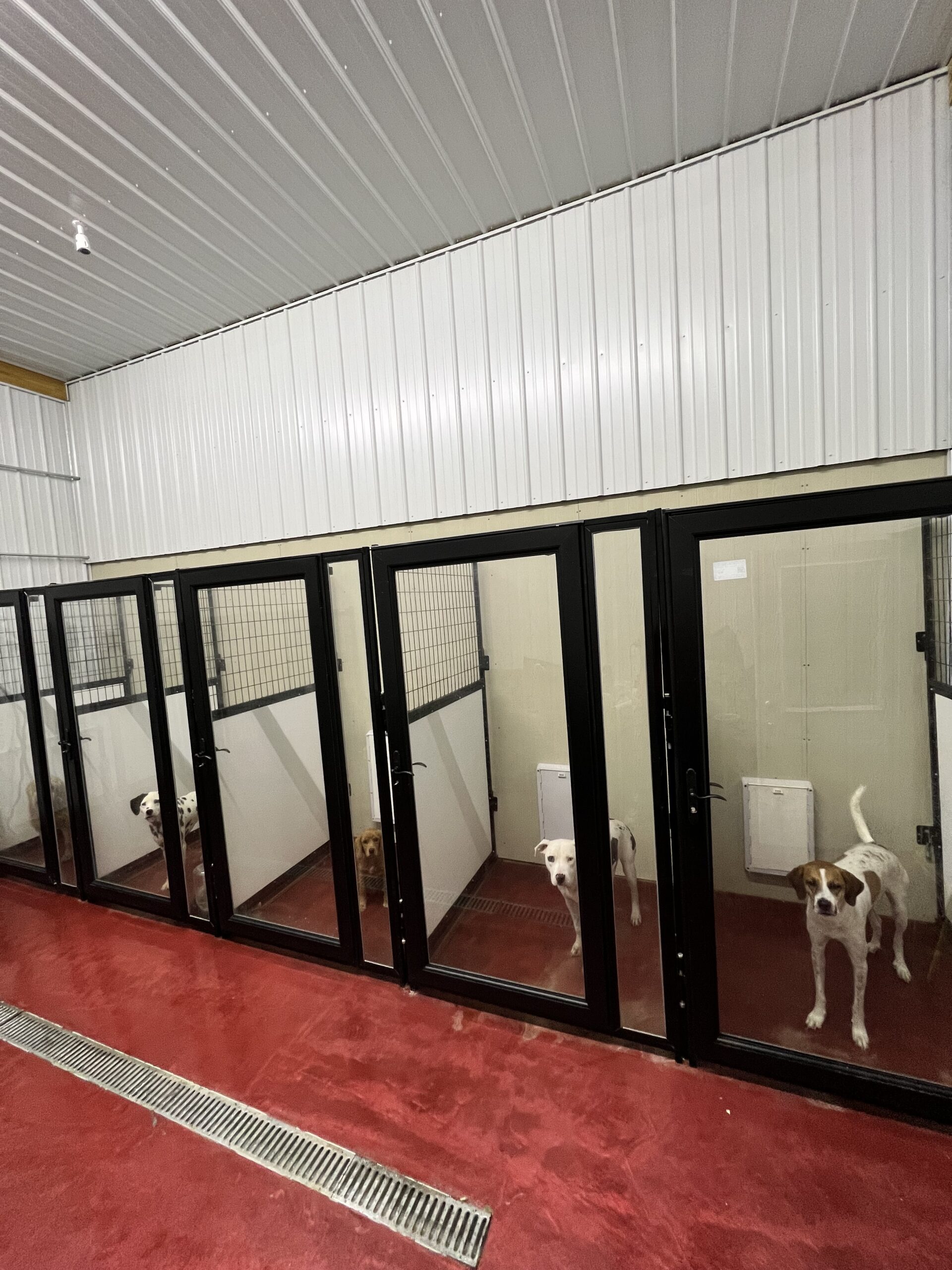
I don’t recommend bringing beds or blankets. This is for liability reasons. Dogs can become upset and destructive – and the last thing we need is for your dog to ingest bedding or tear up a blanket. Your dog doesn’t need a bed or blanket to be comfortable – they will be comfortable enough in my climate controlled building. And tell your dog, “If you’d just listen to me – none of this would even be necessary.”
If you don’t already have the proper tools, I’ll provide a prong (pinch) collar, training leashes, and a muzzle if needed. If you already have some of these items, I’ll evaluate them and may recommend a different style or fit.
Bringing your dog’s food is helpful, especially if they have a sensitive stomach. That said, some dogs may not eat much during the week simply due to stress from being away from home. Use your best judgment. If you do bring food, please place it in a sealed container or pre-portioned bags, and clearly label everything with your name and any feeding instructions.
The more organized and labeled your items are, the smoother the transition will be!
Final Thoughts
This training will revolutionize your life. But only if you let go of the need to control the process. Trust the process. Let your dog be humbled. Let yourself be challenged. And when you reunite with your dog, you’ll both be better for it—stronger, more connected, and ready for a whole new chapter.
Learn More
Click here to learn more about my 5-stage process where you’ll get complete guidance to having off-leash obedience and perfect behavior!